
If you hadn’t heard about prediction markets before 2026, you probably have now.
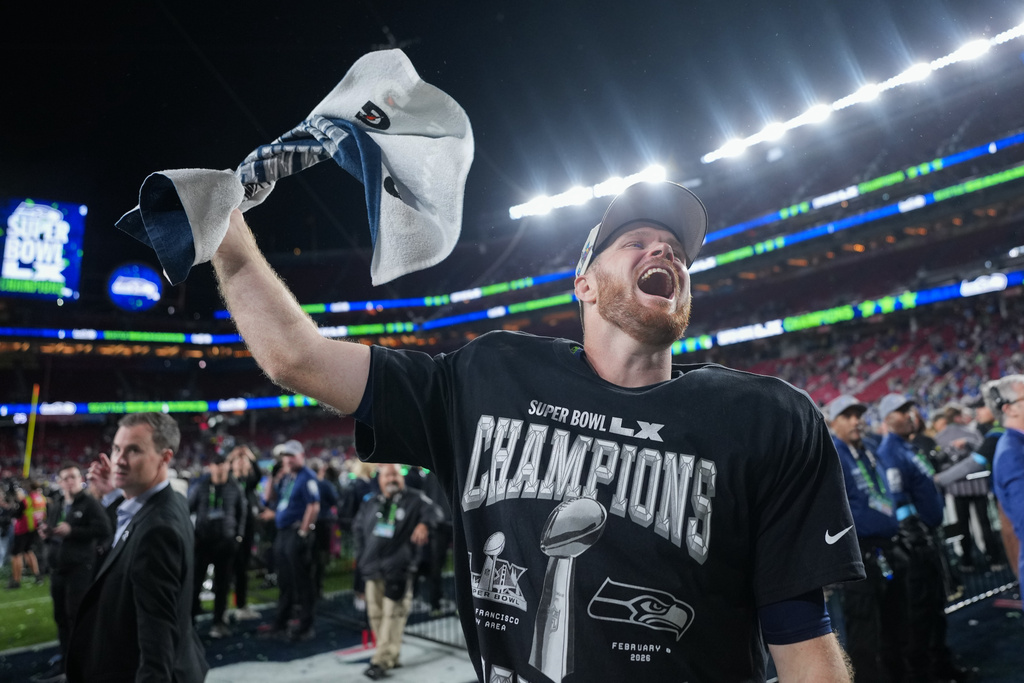
Prediction markets surged into the national spotlight during the 2026 Super Bowl, as billions of dollars in trading volume flowed into markets tied to the game, from the winner to songs in the halftime show.
Soon after, national media attention followed, along with questions about how they differ from traditional sportsbooks.
The two may look similar on the surface, but prediction markets operate differently — in how prices are set, how payouts move, the events they offer, and how they’re regulated.
Here’s what prediction markets are, how they work, and why they’re gaining traction across the country.
What is a Prediction Market?
A prediction market is an exchange for commodity interests where persons can trade on the outcome of real-world events. At its core, these platforms let you back your opinion on the outcome of an event and earn money if you’re right.
From an NBA game to the Oscars, users can choose a specific outcome and back their prediction with money at a certain price.
That price reflects what the market believes the probability of the outcome are, and changes based on what side people are buying and selling.
If the prediction is correct, users get paid when the event is over; if it’s incorrect, it doesn’t pay out.
How Do Prediction Markets Work?
The mechanics of prediction markets and sports betting are fundamentally different. In short: the crowd sets the payout for any outcome, and that payout moves based on money flowing on both sides until the event is decided.
In a prediction market, users aren’t picking against the house. They’re buying and selling positions on a market with other users in real time — those users set the price.
For example, if a market for “Team A wins” pays out 2x, that means the market — or the money backing both sides — believes there’s about a 50% chance it happens.
That payout moves up or down based on what other people are doing in that market, often responding to real-time information.
If more people start backing a certain outcome, the payout goes down — as low as 1.01x. If more people start backing the opposing outcome, the payout rises.
Are Prediction Markets Legal?
Prediction markets are legal in the United States, operating under federal regulatory oversight from the Commodity Futures Trading Commission (CFTC), a federal regulator which has defended its jurisdiction over these markets.
Unlike sportsbooks, which are licensed and regulated by individual states in the U.S. , prediction markets — like PrizePicks Team Picks — operate under federal regulations.
Because they follow a federal regulatory framework, their availability does not always align with where sports betting is permitted. For example, PrizePicks Culture Picks is available in 48 states, while sports betting is only legal in 39 states and Washington, D.C.
How are Prediction Markets Legal in States Where Online Sports Betting Isn’t?
Online sports betting is authorized at the state level. Each state decides whether to legalize it, and sportsbooks must obtain approval in every state where they operate.
Prediction market platforms operate under federal oversight instead, including companies registered as Futures Commission Merchants. That difference in regulatory structure means availability may extend beyond states where sports betting is live.
For example, PrizePicks’ prediction market is CFTC-regulated, offered through its partnership with Kalshi. As a result, Team Picks is available in some states where online sports betting is not. That’s because PrizePicks’ prediction market product follows federal regulations, which include financial, advertising, consumer protection, and eligibility requirements.
What Can You Predict on Prediction Markets?
Traditional sportsbooks primarily focus on games and player performance — game outcomes, player stats, in-game events, and futures.
Prediction markets can cover a broader range of events tied to public interest. In addition to sports, markets include movies, music, award shows, elections, and other moments that capture public interest.
The expanded offerings have contributed to the surge around the Super Bowl, where markets extended beyond the winner and MVP into what songs would be performed at the halftime show and whether certain celebrities would attend the game — each of which garnered millions of dollars in trading volume on Kalshi.
Why is Interest in Prediction Markets on the Rise?
Prediction markets aren’t new — and neither is the idea behind them. The concept dates back to the late 1980s, when researchers began using real-money markets to forecast the 1988 presidential election.
Putting money behind future outcomes and letting prices move based on supply and demand has existed for decades.
But over the past few years, federally-regulated prediction market platforms in the U.S. have accelerated growth, expanding tremendously into sports and pop culture topics.
The momentum found a foothold at the 2026 Super Bowl. Kalshi reported more than $1 billion in trading volume on Super Bowl Sunday this year — up 2,700% year-over-year.
As more Americans look for alternatives to traditional sportsbooks — including in states without legal sports betting, prediction markets have emerged as a parallel way to engage with popular moments in sports and entertainment and have the opportunity to earn money with their predictions.
Team Picks and Culture Picks are event contracts offered by Performance Predictions II, LLC d/b/a PrizePicks Predict, a CFTC-registered FCM and NFA Member. All event contract customers must be U.S. residents and 18+. Some event contracts may not be available in every state.Event contract trading carries significant risk and is not appropriate for everyone. No guarantee against loss is offered. Past results are not necessarily indicative of future results.Void where prohibited by law. Restrictions apply. For full terms of service see prizepicks.com/predict-regulatory. Team and Culture Pick Early Payouts subject to market liquidity. The content provided is for informational and educational purposes only and does not constitute investment advice, or a recommendation to trade any commodity interest.