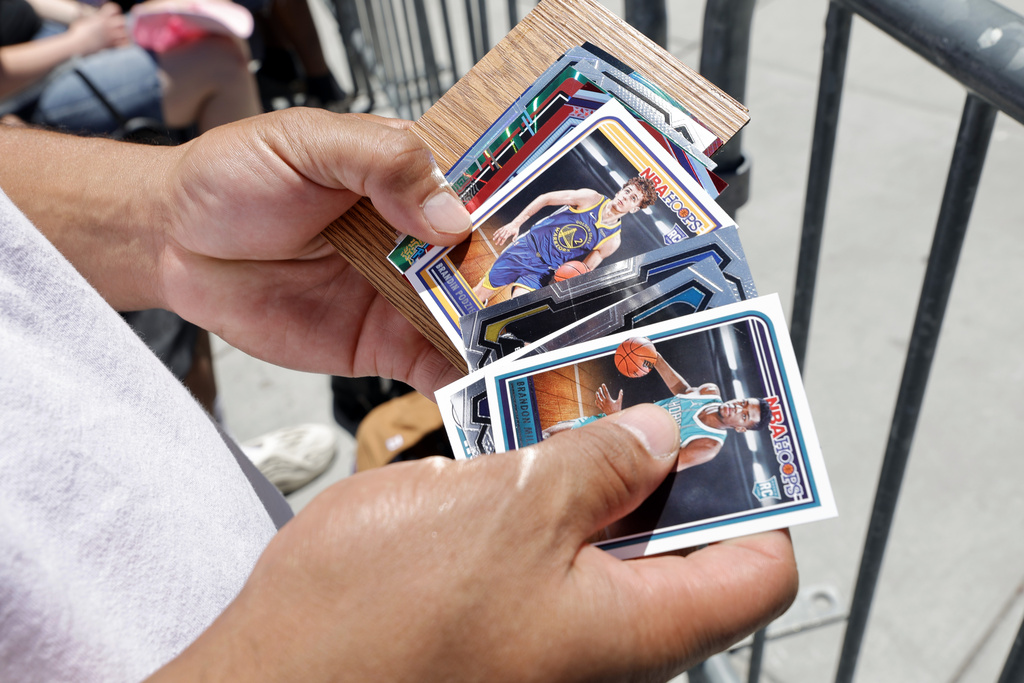
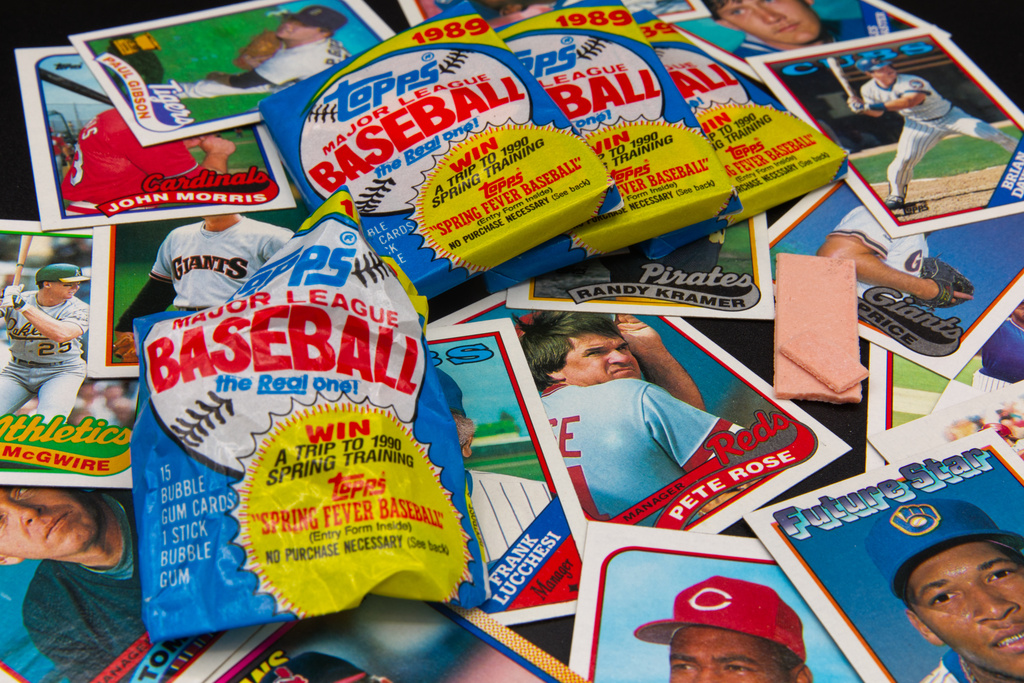
Ripping packs used to mean going to a card shop or big-box store and bringing them home to see what’s inside. While ripping physical packs is still as popular as ever, card breaks changed the game by putting rips on camera and turning them into live events for a community to enjoy.
A card break is a livestreamed pack opening where a host, called a breaker, opens a sealed box or case of sports or Pokémon cards and splits what comes out among buyers who each bought a spot. You pay for a slice of the box, and you get every card tied to your team, Pokémon type, or spot in the break.
Premium packs or boxes can get expensive fast. A case of high-end football cards or a stack of Pokémon booster boxes can run more than most collectors want to spend at once. Breaks split the cost, put every rip on camera, give you a chance to pull grails, and ship your cards to your door.
Live card breaks — or box breaks — changed the hobby, making opening packs something you could watch, buy into, and react to in real time. It also paved the way for newer formats like digital rips, where you open the pack yourself on your phone.
Here's everything you need to know about card breaks: how they work, the break formats you'll see in sports and Pokémon, what you actually get, and where breaks fit next to repacks and digital rips.
What Is a Card Break?
A card break is when a host, called a breaker, opens a sealed box or case of trading cards, usually live on stream, after selling spots to buyers. Each spot is tied to something in the product: a team for sports cards, a Pokémon type for Pokémon, or a numbered position.
When the cards come out, buyers get the cards that match their spot, and the breaker ships them out.
Think of it as splitting a box's cost with a group of strangers. Instead of paying for an entire case of a premium football product or a full Pokémon booster box, you pay for a slice of it and get the cards that land in your slice.
Beyond the convenience, that's why breaking cards took off: it opens up products that would otherwise be out of reach for most collectors.
How Do Sports Card Breaks Work?
Sports card breaks and Pokémon breaks follow the same basic flow: a breaker buys sealed product, lists the break with its format and spot prices, sells every spot, assigns teams, types, or spots, then opens everything on a livestream.
After the break, the breaker sorts cards by spot and ships them to each buyer.
Here’s exactly how breaks work.
- The breaker lists the break. They post the product, the format, the spot prices, and the break rules.
- Buyers purchase spots. Depending on the format, you either pick your team or Pokémon type up front, or get assigned one later.
- Spots get assigned. In random formats, a randomizer assigns teams or types on stream so everyone can see it.
- The breaker opens the product live. The breaker opens every pack on camera, and each card is called out by team, type, or spot.
- Cards get shipped. The breaker sorts the cards and mails them to each buyer. Some ship every card, others ship only hits unless you ask for base.
What Is a Card Breaker?
A card breaker is the person or business that hosts the break. Sports card breakers buy the sealed product, set the format and spot prices, run the livestream, open every pack on camera, and ship the cards to buyers afterward.
Breakers range from solo hobbyists to full-time businesses with studios and staff, and many run both sports and Pokémon breaks.
Because you're trusting the breaker with your money and your cards, a reliable and trustworthy breaker matters as much as the product. More on choosing breakers below.
Box Breaks vs. Case Breaks vs. Group Breaks
These card break terms overlap a lot. The difference is mostly how much product gets opened and how many people split it.
What is a box break?
A box break is opening a single sealed box, like a sports hobby box or a Pokémon booster box (36 packs for most English sets). Fewer cards come out, so spots are usually cheaper, but there are also fewer chances at big hits.
What is a case break?
A case break opens a full case, which is several sealed boxes packed together by the manufacturer.
Pokémon case breaks open multiple booster boxes at once. Case breaks cost more per spot but put a lot more cards and hits in play, including case hits: rare inserts that average about one per case.
What is a group break?
A group break is any break where multiple buyers split one box or case. Most box breaks and case breaks you'll see online are group break — this is just another term for them.
What is a personal break?
A personal break is when one buyer pays for the whole box or case, and the breaker opens it for them on stream. You get everything, plus the livestream moment.
Card Break Formats: Pick Your Team, Random Team, and More
The format decides how spots are assigned and what you get. These are the most common:
- Pick Your Team (PYT): You choose your team before the break. Teams with hot rookies cost more.
- Type Break (Pokémon): The Pokémon version of a team break. Spots are tied to types like Fire, Water, or Psychic, and you get every hit of your type. Types with fan favorites usually cost more.
- Random Team or Random Type: Every spot costs the same, and teams or types are assigned by a randomizer after spots sell.
- Team Draft: Buyers are put in a random order and take turns picking teams, snake-draft style.
- Divisional: You get a whole division instead of one team.
- Hit Draft: After the product is opened, buyers take turns choosing from the hits. Common with premium sports products and high-end Pokémon sets.
- Pack Break: Common in Pokémon. Each spot is assigned one or more packs from the box, and you get everything in your packs.
- Set Break: A complete set is split into numbered spots, and each spot gets one card.
What Do You Get in a Card Break?
In a card break, you get the cards tied to your spot. In a team break, that's every card from your team that comes out of the product, including base cards, inserts, and hits.
In a Pokémon type break, it's usually every hit of your type. Some spots get a stack of cards. Others get only base cards or commons, depending on what the product produces.
That's the part new collectors need to know going in: no spot is guaranteed a hit unless the format says so. Hits are the cards everyone tunes in for: autographs, memorabilia patches, and low-numbered parallels in sports, and illustration rares, full arts, and secret rares in Pokémon.
For a full rundown of hits, case hits, and grail cards, see our explainer.
Shipping varies by breaker. Some send every card you're owed. Others ship hits only and hold base cards unless you request them. Check before you buy.
Live Card Breaks: Where Breaks Happen
Most card breaks happen live. Breakers stream on video platforms, social apps, and live shopping apps, and some run breaks through their own websites.
The livestream is as much the product as the cards: you watch your spot get opened in real time, the chat reacts, and the best pulls get clipped and shared. Pokémon breaks have become some of the most-watched streams in the hobby for exactly this reason.
Live breaks also keep things transparent. When every pack is opened on camera, buyers can see exactly what came out and where it went.
When Did Card Breaks Start? A Short History
Card breaks started in the mid-2000s, when card dealers began recording themselves opening sealed boxes and selling shares of the product to viewers. Card shops took group breaks to YouTube in the late 2000s, and breaks took off in 2020, when shops closed during the pandemic and collectors moved online, while social media sites like TikTok and Instagram gained popularity.
The early breakers were card shop owners filming boxes on a camera in the back of the store. Before long, the biggest breakers drew thousands of live viewers per break, and many of them never bought a spot. They tuned in simply for the rip and the chat.
Then 2020 hit. With shops closed and live sports on pause, breakers reported big jumps in viewers and new buyers, and breaking went from a niche to a core part of the hobby. Live shopping apps built whole marketplaces around it.
Since then, the format has kept moving toward faster and more direct. Some live break platforms now store your hits the second they're revealed, so you can sell or ship a card before the stream even ends.
Digital rips take that idea all the way: no host, no group, no wait. You open the pack, and a real card is on the other side.
What Are Pokémon Card Breaks?
Pokémon card breaks work like sports card breaks: a breaker opens sealed Pokémon booster boxes or cases live, and buyers get the cards tied to their spot. Instead of teams, spots are usually tied to Pokémon types or to specific packs from the box, and the breaker ships each buyer their cards after the stream.
Pokémon is the biggest card category outside sports, and breaks have followed. Many collectors move between sports cards and Pokémon, so the same breakers and livestream audiences often cover both.
How Pokémon type breaks work
A type break splits a box or case by Pokémon type. You buy a type, the breaker opens everything, and you get every qualifying hit of that type.
Breakers set their own rules on which cards count, so check whether trainers, energy, and colorless cards are included and how dual-type cards are handled.
Pokémon booster box breaks
In a booster box break, the breaker opens a full booster box on stream. Spots might be tied to types, to individual packs, or to a hit draft at the end. It's the easiest way to get a slice of a new set's release-day box without buying the box yourself.
Japanese Pokémon breaks
Japanese Pokémon boxes are popular in breaks because of their card quality and artwork, and because some sets release in Japan before they come out in English. They run in the same formats, but pack and box contents differ from English sets.
Vintage Pokémon breaks
Some breakers open older sealed Pokémon products. These breaks cost more per spot because vintage sealed boxes only become more scarce over time, and top cards from early sets are among the most valuable in the hobby.
Card Breaks vs. Repacks vs. Digital Rips
Card breaks are one of several ways to open packs without buying a full box. Here's how they stack up:
- Card breaks: A breaker opens a box or case on stream and ships you the cards from your spot.
- Repacks: A seller combines cards from different products into new packs, often with at least one hit per pack. You open them yourself. Repacks are common in both sports and Pokémon.
- Digital rips: You open a digital pack on your phone that reveals a real sports or Pokémon card, depending on the pack you bought. You see it instantly, then choose to have it shipped or sell it back.
Digital rips grew out of the same thing breaks made popular: real sealed product, opened online, with every reveal on screen. What changed is who opens the pack and how fast the card is yours.
With a digital rip, you're the one ripping, and you don't wait on a stream schedule or a shipment to see what you pulled. Many digital rip platforms also store your card as graded and slabbed, so you know its condition from the start.
Are Card Breaks Worth It?
Card breaks are worth it if you want cards from a specific team, a favorite Pokémon type, or a high-end product without paying for the whole box, and you enjoy the livestream experience.
They're less worth it if you want one specific player or Pokémon card, since buying that single card directly is usually more cost-effective.
Why collectors like breaks:
- Lower-cost entry into premium products
- A shot at cards you might not otherwise hit, depending on the product.
- Focus your collection on one team or Pokémon type
- The community and the live moment
What to keep in mind:
- Your spot may come back with only base cards
- Spot prices often include the breaker's markup
- You'll wait on shipping before the cards are in hand
- Spots add up fast, so set a budget before the stream starts
How to Pick a Card Breaker: Checklist
The best card breakers are upfront about everything and have all the details sorted out before the break. Before you buy a spot in a card break, here is your checklist to run through:
- Read the break rules. Good breakers post the format, how teams or types are assigned, and how they handle multi-team or dual-type cards.
- Check what counts as a hit. Definitions vary from breaker to breaker.
- Know the shipping policy. Cost, timing, and whether base cards ship.
- Watch a past break. Recorded streams show you how they run things.
- Compare spot prices. The same product can be priced very differently across breakers.
- Read reviews. Look for a track record of buyers actually receiving their cards.
Card Break Terms to Know
Spot (or slot): Your purchased share of a break.
Breaker: The host who buys the product, runs the stream, and ships the cards.
Hit: A premium card. In sports, an autograph, patch, or low-numbered parallel. In Pokémon, an illustration rare, full art, or secret rare.
Type break: A Pokémon break where spots are tied to Pokémon types instead of teams.
Booster box: The standard sealed Pokémon box, usually 36 packs for English sets.
Base: The standard, non-insert cards in a product. Pokémon collectors usually call these commons and uncommons.
Case hit: A rare insert that averages about one per case.
Filler: A smaller, cheaper break run to fill the remaining spots in a bigger break.
Rip: Opening a pack. "Ripping" works for breaks, sealed boxes, and digital packs.
Sealed: Unopened product, straight from the manufacturer.
Card Break FAQ
What are card breaks?
Card breaks are livestreamed events where a breaker opens a sealed box or case of sports or Pokémon cards and splits the cards among buyers who purchased spots, usually by team or Pokémon type.
What is card breaking?
Card breaking is opening sealed trading card products for a group of buyers who each purchased a share of the pack, box, case, or other product.
How do Pokémon card breaks work?
A breaker opens sealed Pokémon booster boxes on stream, and each buyer gets the cards tied to their spot, usually a Pokémon type or a set of packs.
What is a Pokémon type break?
A type break assigns each spot a Pokémon type, like Fire or Water. You get every qualifying hit of your type from the break.
How much do card breaks cost?
Spot prices depend on the product, the format, and the team. Spots in a single box break can be a few dollars, while a top team in a high-end case break can cost hundreds.
Do you always get a hit in a card break?
No. Unless the format guarantees one, like a hit draft, your spot may only receive base cards.
Are box breaks worth it?
Box breaks are a lower-cost way to get cards from a product you want. If you're after one specific card, buying that single card directly is usually more efficient, unless you are chasing a grail.
What's the difference between a card break and a digital rip?
In a card break, a host opens the pack on stream and ships you the cards. Digital rips grew out of the same idea, but you open the pack yourself and see your card instantly, with no group or host involved.
Team Picks and Culture Picks are event contracts offered by Performance Predictions II, LLC d/b/a PrizePicks Predict, a CFTC-registered FCM and NFA Member. All event contract customers must be U.S. residents and 18+. Some event contracts may not be available in every state.Event contract trading carries significant risk and is not appropriate for everyone. No guarantee against loss is offered. Past results are not necessarily indicative of future results.Void where prohibited by law. Restrictions apply. For full terms of service see prizepicks.com/predict-regulatory. Team and Culture Pick Early Payouts subject to market liquidity. The content provided is for informational and educational purposes only and does not constitute investment advice, or a recommendation to trade any commodity interest.