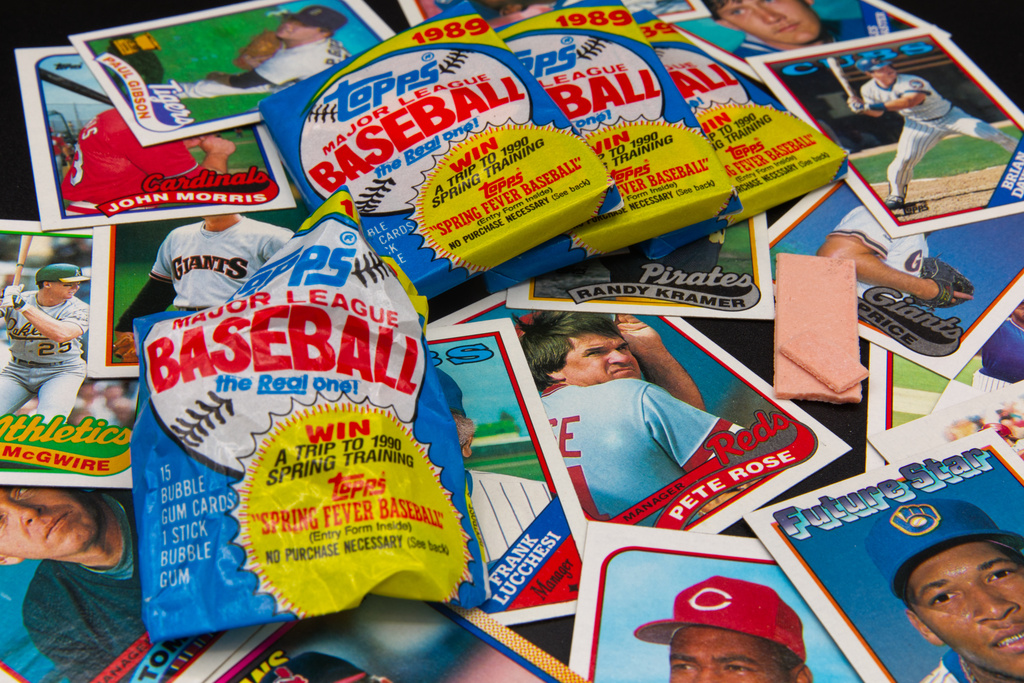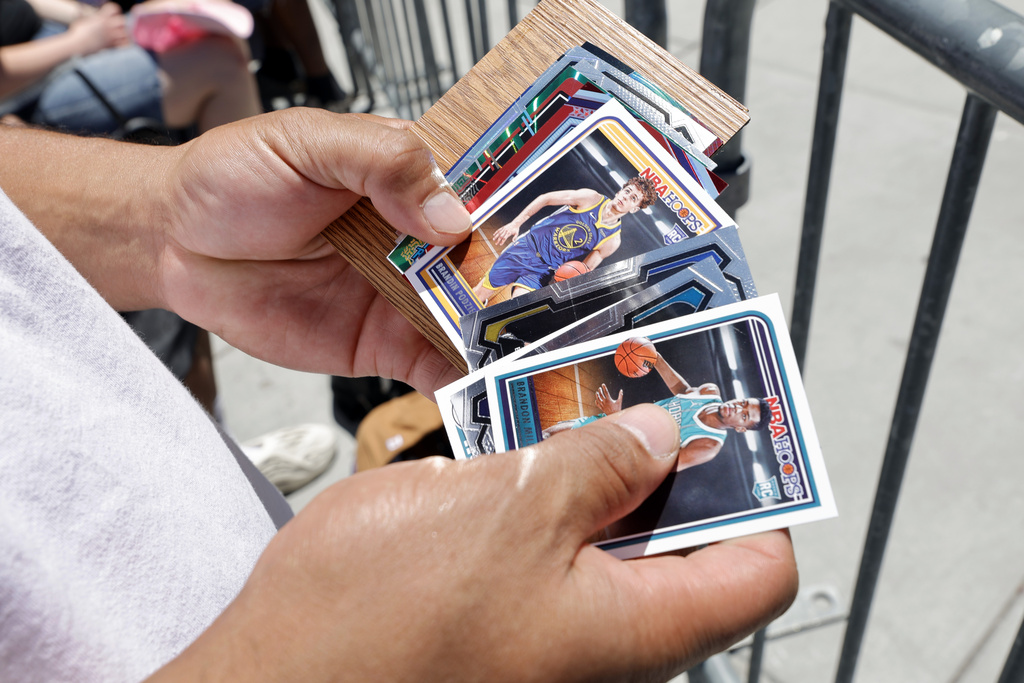

Most cards in trading card packs or boxes are base cards. While a few pulls are hits, every set has one or two cards at the very top of the checklist — the ones everyone is talking about before they even go on sale.
In traditional trading cards, from sports to Pokémon, those are the chase cards.
Then, there are the ultra-rare card you’d trade your whole collection for if you could get your hands on it. That’s your grail.
Here’s what the terms chase card and grail card mean in the trading card space, how they’re different, and how they show up in physical packs, boxes, and digital rips.
What Is a Chase Card?
A chase card is the most sought-after card in a specific set or drop, usually because it’s the rarest card and hardest to pull — thus the most valuable. Chase cards come in many forms, but often include a 1/1, a low-numbered parallel, a rookie autograph, or, in Pokémon, a top-tier secret rare.
Collectors open packs and boxes hoping to find it — thus, chasing the most valuable, ultra-rare card. That’s where the name comes from.
A chase card belongs to one release; each set has its own chase card (or cards). The top card in this year's set has nothing to do with the top card in next year's. Most products have more than one, and you'll usually see them in product previews and box-opening videos to promote the packs.
What Is a Grail Card?
A grail card is the one card a collector wants more than any other — the card at the top of their list, often for years. The name comes from the Holy Grail, the legendary object people searched for and rarely found. A grail can be a hobby-wide icon, making it highly valuable, or a card with special meaning to a collector, whether it’s their favorite team, player, or special art.
Hobby-wide Grails
Some cards are grails for almost everyone — these are the ones that are highly valuable and often can no longer be hit in packs unless they are in the latest sets.
The usual short list includes the T206 Honus Wagner, the 1952 Topps Mickey Mantle, and the Wayne Gretzky rookie card. Modern grails are joining them fast, like the Pikachu Illustrator PSA 10, which sold for $16,492,000 in February 2026, and the 2026 Topps Chrome Gold Logoman Shohei Ohtani, which sold for $11 million in July 2026.
Personal Grails
Your personal grail doesn't have to cost millions. It might be the card you pulled as a kid and traded away, your favorite player's rookie, or a card you love for the art or photo.
Set builders show how far that goes: a PSA 10 Johnny Moore from 1986 Fleer once sold for about $90,000, mostly because completing that set — the one with the iconic Michael Jordan rookie — requires it.
Whatever it costs, if it's the card you've wanted longest, pulling your grail hits different, and there’s something special about pulling a card you're personally connected to.
Chase Card vs. Grail Card: What's the Difference?
A chase card is defined by the set: it's the hardest, most wanted pull in one product. A grail is defined by the collector: it's the card you want most, from any set or any era. Some cards are both. A chase card becomes a grail once it sits at the top of someone's list.
- Chase card: tied to one product, set by print run and odds, and new with every release.
- Grail card: tied to a collector, from any year or set, and it may never change.
- Both: the Patrick Mahomes Rookie Patch Auto 1/1 was packed in 2017 National Treasures, so it was a chase card in that product. After it sold for $4.3 million in 2021, it's a grail now.
- Grail, never a chase card: This is a rare one, but the Pikachu Illustrator was never in a pack. It was awarded to the top entrants in a 1998 illustration contest in Japan, making it an ultimate grail for Pokémon collectors.
What Is a Hit in Card Collecting?
A hit is any premium card beyond the base set that has some resale value on the secondary market — usually an autograph, a memorabilia or patch card, a low-numbered parallel, or a key rookie.
Hobby boxes usually tell you how many hits to expect per box. Every chase card is a hit, but most hits aren't chase cards.
Box hits vs. case hits
A box hit is a card you can expect about once per box. A case hit lands about once per sealed case, which is a carton holding several boxes of the same product.
Panini's Kaboom and Donruss Optic's Downtown inserts are well-known examples. Once a case's case hit has been pulled, collectors call what's left a dead case.
What are the Best Sports Cards to Pull? From Base Cards to Grail
In a typical sports product, cards stack up roughly like this:
- Base card: the standard card that makes up most of the checklist.
- Insert: a bonus card with its own design or theme.
- Parallel: a version of a base card in a different color or finish, often numbered (i.e. x/250, meaning only 250 exist)..
- Hit: autographs, patches, low-numbered parallels, and key rookies.
- Case hit: typically about one per case.
- Chase card: the top of the checklist, often a 1/1.
A grail sits outside that ladder because it can depend on the collector — not always the product. Plus, some boxes won’t have any cards that would be considered “grails.”
What Makes a Card a Chase Card?
Four things usually make a sports or Pokémon card the chase: how few exist, who's on it, how it looks, and what condition it's in. The fewer copies, the bigger the name, and the more distinctive the design, the more collectors want it.
- Scarcity: print runs like /10, /5, and 1/1, plus long pack odds.
- The player or Pokémon: rookies and stars in sports. Charizard, Pikachu, and fan favorites in Pokémon.
- Design: refractor finishes, insert sets with a following, and alternate or full-art illustrations.
- Condition: a top-graded copy can be the chase within the chase. Here's how grading and slabs affect value, including what a pop report tells you about how many copies exist at each grade.
Common Types of Chase Cards
1/1s and Superfractors
A 1/1 (one of one) is a card with a print run of one, so only one copy exists. In Topps Chrome and Bowman Chrome, the signature 1/1 is the Superfractor, a gold refractor. Other 1/1s include printing plates, Black Prizms, and Logoman patches.
Low-numbered parallels
Numbered parallels are printed in small runs, stamped on the card as a fraction like 7/25. Colors mean different things by brand. A gold parallel is numbered to 50 in Topps and to 10 in Panini, so check the set before you assume a specific color is rare.
Rookie autographs and patch autos
Rookie autographs are the core chase in most sports products, and rookie patch autos (RPAs) add a piece of game-worn jersey. The top tier pairs both with a low print run.
Short prints and super short prints
A short print (SP) is printed in smaller numbers than the base set, often for a star or rookie. A super short print (SSP) is rarer still, with odds at about the case-hit level.
Pokémon chase cards
In Pokémon, the chase cards are the top secret rares and ultra rares in each expansion. In current sets, that's usually the Special Illustration Rares and the set's highest tier. Popular Pokémon like Charizard and Pikachu tend to lead the list, and a single specific chase card can be well under a 1-in-100-pack pull.
How to Find Chase Cards in Packs and Boxes
Start with the odds. Pack odds are written as 1:X, meaning a card shows up about once every X packs on average. You'll find them on the wrapper, on the box, or on the manufacturer's website.
Some examples of how long the chances to pull a chase card get:
- Topps Chrome SpongeBob: Superfractors were listed at 1:4,255 hobby packs, roughly one in every 350 boxes, according to Sports Illustrated. The odds of the Superfractor for one specific card are far longer.
- Pokémon 30th Anniversary: in one 652-pack community opening, Special Illustration Rares showed up about once every 18 packs and the top tier about once every 82. Those rates are for the whole tier. The odds of any single card are much lower.
Two things to remember. Odds are averages, both in traditional cards and digital rips, so results swing widely from pack to pack or box to box. And every pack is independent, so a string of misses doesn't make the next pack more likely to have the card.
Chase Cards and Grails on Digital Rip Platforms
Digital rip platforms let you open a pack online and get a real card, which you can usually sell back or have shipped. Many of them show each pack's top cards before you buy, often labeled as chase cards or grails, along with the odds for each tier.
Most of those top cards are already graded and slabbed, so you don’t have to worry about that part of the process if it’s a highly valuable card.
That changes how you look for a specific card. Instead of a set checklist, you're looking at a pack's listed lineup. Before you rip, check:
- The top cards in the pack: what's actually in the pool right now.
- The odds by tier: how often each level of card turns up.
- How cards are valued: what the platform bases its sell-back offers on.
Our guide to how online pack openings work covers the full process.
Chase Card and Grail Terms to Know for Sports & Pokémon Cards
- Base card: the standard card in a set and the bulk of every pack.
- Insert: a bonus card with its own theme or design.
- Parallel: an alternate version of a base card, often in a different color and numbered.
- Hit: any premium pull, like an auto, patch, numbered parallel, or key rookie.
- Box hit: a card you can expect about once per box.
- Case hit: a card that lands about once per sealed case.
- Dead case: a case whose case hit has already been pulled.
- SP / SSP: short print and super short print, cards printed in smaller numbers than the base set.
- 1/1: a card with a print run of one — only one exists.
- Superfractor: the gold 1/1 refractor in Topps Chrome and Bowman Chrome products.
- Chase card: the most sought-after card in a set.
- Grail: the card a collector wants most, from any set.
- White whale: a card you've been hunting for years and haven't found.
- Rainbow: every parallel version of one card, collected together.
- PC: personal collection, the cards you keep rather than sell.
Rip Responsibly: Set a Budget Before You Rip
Chase cards are rare on purpose. Social feeds show the big pulls, not the hundreds of packs that came up empty, which makes top cards look more common than they are.
Decide what you'll spend before you open anything, and treat any big pull as a bonus, not the plan. Always collect responsibly and within your means.
Chase Cards and Grail Cards FAQ
What does chase card mean?
A chase card is the most sought-after card in a set, usually the hardest to pull, like a 1/1, a low-numbered parallel, or a top rookie autograph.
What is a grail card?
A grail is the one card a collector wants more than any other. It can be a famous card like the T206 Honus Wagner or a personal favorite only you care about.
Is a chase card the same as a hit?
No. A hit is any premium card beyond the base set. Chase cards are the rarest and most wanted hits in a product.
What's the difference between a case hit and a chase card?
A case hit shows up about once per sealed case. A chase card is the top of the whole checklist and can be much rarer than one per case.
What are Pokémon chase cards?
They're the top secret rares and ultra rares in an expansion, usually the Special Illustration Rares and the set's highest tier, often featuring Pokémon like Charizard or Pikachu.
Can a base card be a grail?
Yes. Set builders often need a specific base card in top condition, and a PSA 10 of a tough base card can sell for tens of thousands of dollars.
What's the most expensive grail card ever sold?
The PSA 10 Pikachu Illustrator sold for $16,492,000 at auction in February 2026, the highest price ever paid for a trading card at auction.
Team Picks and Culture Picks are event contracts offered by Performance Predictions II, LLC d/b/a PrizePicks Predict, a CFTC-registered FCM and NFA Member. All event contract customers must be U.S. residents and 18+. Some event contracts may not be available in every state.Event contract trading carries significant risk and is not appropriate for everyone. No guarantee against loss is offered. Past results are not necessarily indicative of future results.Void where prohibited by law. Restrictions apply. For full terms of service see prizepicks.com/predict-regulatory. Team and Culture Pick Early Payouts subject to market liquidity. The content provided is for informational and educational purposes only and does not constitute investment advice, or a recommendation to trade any commodity interest.