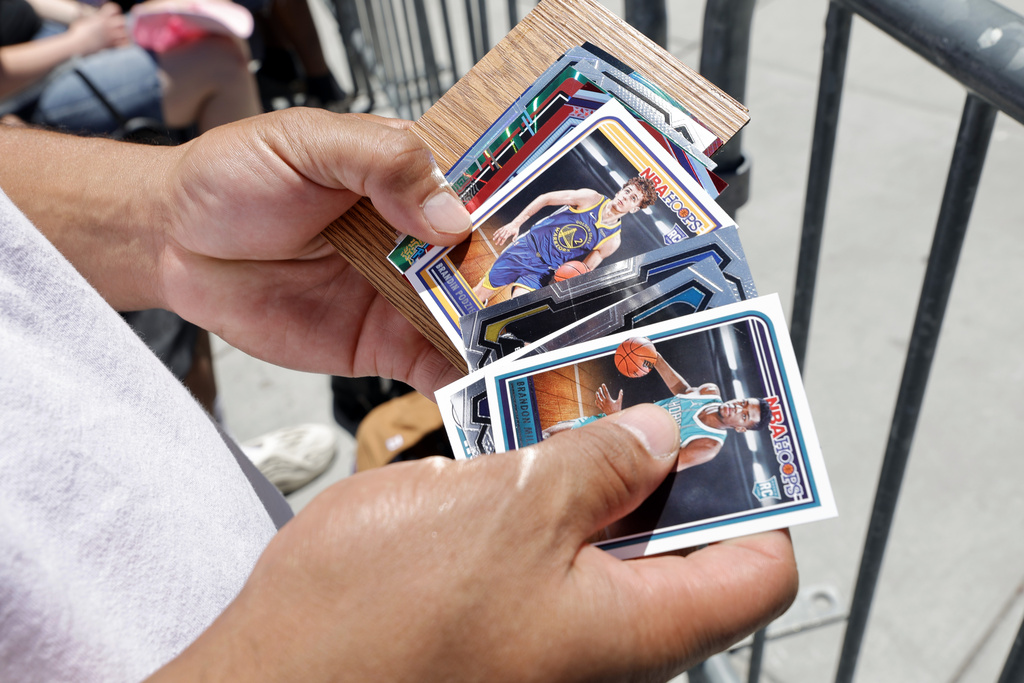
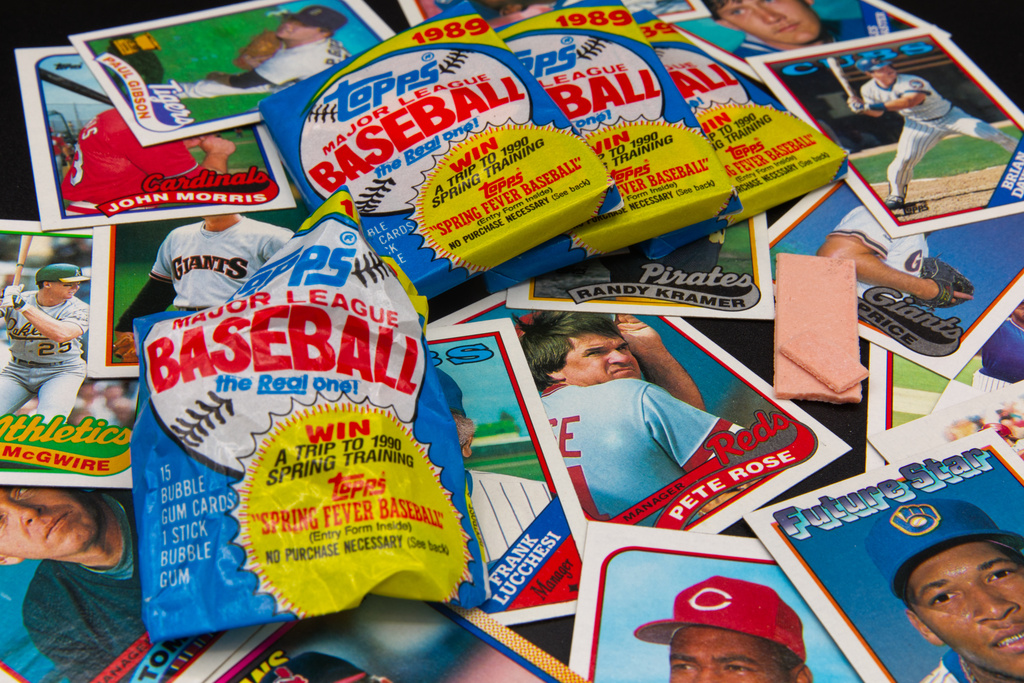
Two copies of the same card can look identical in your hand and sell for wildly different prices. The difference usually comes down to one number on a slab label, based on minor condition differences.
The PSA grading scale is the 1-to-10 system Professional Sports Authenticator uses to score a trading card's condition. A PSA 1 (Poor) is heavily worn, while a PSA 10 (Gem Mint) is a virtually perfect card. Grades between them reflect how the card's centering, corners, edges, and surface hold up under inspection.
That number drives value across sports cards and Pokémon. A 1989 Upper Deck Ken Griffey Jr. rookie runs about $50 raw, $80 as a PSA 9, and around $4,500 as a PSA 10 — same card, one grade apart.
If you're new to graded cards, start with our guide to what a slab is and how graded and raw cards differ.
Here's everything you need to know about the PSA grading scale: what every grade means, what makes a card a PSA 10, how long PSA grading takes, what it costs, and whether grading is worth it.
What Is the PSA Grading Scale?
The PSA grading scale is a 1-to-10 condition scale for trading cards, with 10 (Gem Mint) as the top grade and 1 (Poor) at the bottom. PSA graders check centering, corners, edges, and surface, then assign a grade that's printed on the slab label alongside a unique certification number.
PSA is the biggest grader in the hobby, so its scale is the one most collectors use as a reference point — even when they're talking about cards graded by someone else.
PSA Grading Scale Chart: Every Grade From 1 to 10
Here's what each PSA grade means, from the top down. Centering is listed as front/back tolerances where PSA publishes them.
- PSA 10 — Gem Mint (GEM-MT): A virtually perfect card. Four sharp corners, full original gloss, no staining, and centering within about 55/45 on the front and 75/25 on the back.
- PSA 9 — Mint: A superb card with just one minor flaw, like a tiny printing imperfection or slightly off-white borders. Centering about 60/40 or better on the front, 90/10 on the back.
- PSA 8 — Near Mint-Mint (NM-MT): Looks like a 9 at first glance, but shows a small flaw or two on closer inspection, like slight fraying at a corner. Centering about 65/35 front, 90/10 back.
- PSA 7 — Near Mint (NM): Slight surface wear visible on close inspection and minor corner fraying. Centering about 70/30 front, 90/10 back.
- PSA 6 — Excellent-Mint (EX-MT): Visible surface wear or a light scratch, and slightly graduated corner fraying.
- PSA 5 — Excellent (EX): More noticeable corner rounding, minor chipping on the edges, and some loss of gloss.
- PSA 4 — Very Good-Excellent (VG-EX): Slightly rounded corners, noticeable surface wear, and possibly a light crease.
- PSA 3 — Very Good (VG): Rounded corners, obvious surface wear, and possibly a crease.
- PSA 2 — Good: Accelerated wear, several creases, and heavily worn corners.
- PSA 1.5 — Fair: Extreme wear, but the card is still fully intact.
- PSA 1 — Poor: Heavily worn or damaged, sometimes with missing pieces, heavy creasing, or major staining.
Full definitions and more info on every grade: go to PSA's grading standards page.
Does PSA give half grades?
Yes. PSA added half-point grades in 2008 for cards that show high-end qualities within a grade, so you'll see grades like PSA 7.5 and PSA 8.5.
There's no PSA 9.5. The scale jumps straight from Mint 9 to Gem Mint 10, and half grades are rare in practice.
What do OC, ST, and other PSA qualifiers mean?
Sometimes a card earns a grade but has one specific problem PSA wants to call out. That's a qualifier, and it shows up on the label next to the grade:
- OC: Off-center
- ST: Staining
- PD: Print defect
- OF: Out of focus
- MK: Marks, like ink or pen
- MC: Miscut
A qualified card usually sells for noticeably less than a straight grade, since the label flags the flaw for every future buyer.
What does "Authentic" mean on a PSA slab?
An "Authentic" label means PSA confirmed the card is genuine but didn't give it a number grade. That usually happens when a card has been trimmed, recolored, or otherwise altered, or when it's too damaged to grade.
What Does PSA 10 Mean?
PSA 10 means a card earned PSA's highest grade, Gem Mint. It's a virtually perfect card: four sharp corners, clean edges, full original gloss, no staining, and front centering within about 55/45. PSA allows a slight printing imperfection only if it doesn't hurt the card's overall eye appeal.
Here's what a PSA 10 needs:
- Centering: About 55/45 or better on the front and 75/25 or better on the back.
- Corners: All four sharp, with no fraying or whitening.
- Edges: Clean, with no chipping or roughness.
- Surface: Full gloss, no scratches, no stains, and no print lines that pull your eye.
PSA 10s are hard to come by. Out of more than 35,000 Base Set Unlimited Charizards graded by PSA, fewer than 350 have come back as a 10, roughly 1%. Modern cards gem more often, but the rate still varies a lot by set and card.
What Does Gem Mint Mean in Cards?
Gem Mint is the condition label for a near-flawless card. At PSA, Gem Mint and 10 are the same thing: PSA 10 is printed on the slab as GEM-MT 10. Other graders use the term too, but they don't always attach it to the same number.
You'll hear Gem Mint turned into hobby shorthand:
- "Gem" or "gemmed": A card that graded a 10, like "my Cooper Flaggrookie gemmed."
- Gem rate: The share of graded copies of a card that came back as a 10. A low gem rate means 10s are scarce, which usually pushes their price up.
PSA 10 vs. PSA 9: Why One Point Matters So Much
A PSA 9 is still a beautiful card, but the market treats a 10 as a different tier. The gap depends mostly on how many 10s exist and how many collectors want one.
- Scarce 10s, huge gaps: Cllct found one Gunnar Henderson rookie with just 25 PSA 10s against 2,200-plus PSA 9s, and a price ratio of more than 100x between the two grades.
- Plenty of 10s, smaller gaps: When a card has thousands of PSA 10s in circulation, the premium over a 9 shrinks, sometimes to less than 2x.
That's why collectors check the pop report before they buy or submit. It shows how many copies exist at each grade, and our guide to slabs covers how to read one.
How Does PSA Grade a Card?
Every card goes through two steps: authentication and grading. PSA first confirms the card is real and hasn't been altered. Then graders score its condition across four areas and assign one overall grade.
- Centering: How evenly the borders frame the image, measured front and back.
- Corners: How sharp each corner is, checked under magnification.
- Edges: Chipping, roughness, or wear along all four sides.
- Surface: Scratches, print lines, stains, dents, and loss of gloss.
PSA gives one number for the whole card. It doesn't show separate scores, so a single weak area can cap the grade even if everything else is perfect.
Card Grading Scale Explained: PSA vs. BGS vs. CGC vs. SGC
Most major graders use a 1-to-10 scale, and the middle of those scales lines up pretty closely. The top end is where they split.
PSA stops at Gem Mint 10, while BGS, CGC, and SGC each have a grade above their standard Gem Mint.
- PSA: Gem Mint 10 is the top grade. No subgrades.
- BGS (Beckett): Grades with four subgrades (centering, corners, edges, surface). A 9.5 is Gem Mint, a 10 is Pristine, and a Black Label 10 means a perfect 10 on all four subgrades — one of the rarest grades in the hobby.
- CGC: Splits the top into Gem Mint 10 and the stricter Pristine 10. Especially popular with Pokémon collectors.
- SGC: Also has Gem Mint 10 and Pristine 10, which carries a gold label. Its black "tuxedo" slabs are a favorite for vintage cards.
So a "10" doesn't mean the same thing everywhere. On the resale market, though, a PSA 10 is the grade most buyers compare everything else against. For more on each company, see our breakdown of the major card grading companies.
How Long Does PSA Grading Take?
PSA grading takes anywhere from about 7 to 100 business days, depending on the service level you pay for. Standard, the cheapest open tier, is estimated at 90–100 business days, while Premier runs 7–10. The clock starts once PSA logs your order into its system, not when you ship it.
Here's PSA's current lineup, as of early October 2026:
- Standard: $59.99 per card, 90–100 business days, cards valued up to $1,000
- Priority: $79.99, 70–80 business days, up to $1,500
- Express: $199, 20–30 business days, up to $2,500
- Super Express: $349, 10–15 business days, up to $5,000
- Premier: $599, 7–10 business days, up to $10,000
Cards worth more than $10,000 go through PSA's Premium tiers, which start at $999 per card.
A few things to know before you submit:
- Business days, not calendar days. A 90-business-day estimate works out to roughly four months.
- Estimates can run long. PSA has been working through a big backlog in 2026, and its lower-cost Value tiers have been paused since June.
- Paying more doesn't change your grade. A faster tier only shortens the wait.
That wait is one reason graded cards are so appealing on the buying side. On many digital rip platforms, the higher-value cards in a digital pack are already graded and slabbed, so you know the grade the moment you pull the card.
How Much Does PSA Grading Cost?
PSA grading currently starts at $59.99 per card for the Standard tier and climbs to $599 for Premier, with Premium tiers above that for high-value cards. Your card's declared value decides the lowest tier you're allowed to use, and shipping both ways adds to the total.
Because the minimum fee is now about $60, grading makes the most sense for cards that are worth well over that amount once slabbed.
Is Grading Your Card Worth It? It Depends.
Grading is worth it when a card's graded value clearly beats its raw value plus the grading fee and shipping, and when you're confident it can grade high. For cards with big gaps between a PSA 9 and a PSA 10, a clean copy can be worth far more slabbed. For low-value cards, the fee usually outweighs the bump.
Here's a quick way to run the numbers, using round figures:
- Your raw card is worth $40, and grading it at the Standard tier costs about $60 plus shipping.
- If it comes back a PSA 10 that sells for $300, grading made a big difference.
- If it comes back a PSA 9 that sells for $70, you've spent about $100 to own a $70 card.
Before you grade a card, it's important to be realistic about whether it can earn a 10. A raw card still carries that possibility. Once it's slabbed as a 9, it doesn't.
Grading usually makes sense when:
- The card is worth well over the grading fee, even at a PSA 8 or 9
- The PSA 10 vs. PSA 9 gap is big and the card looks clean under close inspection
- You plan to sell it and want buyers to trust the condition and authenticity
- It's a card you want protected long-term, like a grail or a key piece of your PC (personal collection)
You might skip grading when:
- The card is worth less than the fee
- There's visible wear, off-center borders, or surface scratches
- The card already has thousands of PSA 10s, so the premium is small
- You'd rather buy the card already graded at the grade you want
- You have no desire to sell the card and already have the means to safely protect it.
That last point matters more than most new collectors expect. If you want one specific card in a specific grade, buying it already slabbed is often cheaper than grading copies and hoping one comes back a 10. If you're hunting a grail card, the grade on the label is a big part of what you're paying for.
How to Give Your Card Its Best Shot at a PSA 10
You can't change how a card was printed, but you can avoid knocking it down a grade before it ever reaches PSA. Before you submit, run through this checklist:
- Inspect it under bright light. Tilt the card to catch scratches, print lines, and surface dents.
- Check centering front and back. If one border is clearly wider than the other, it likely won't make a 10.
- Look closely at the corners and edges. Any whitening or chipping usually rules out Gem Mint.
- Sleeve it right away. Put the card in a penny sleeve and a semi-rigid holder or toploader as soon as it's out of the pack.
- Don't try to clean or fix it. Wiping, pressing, or trimming can damage the card or get it marked as altered.
PSA Grading Terms to Know
Gem Mint: The top condition grade. At PSA, that's a 10.
Gem rate: The percentage of graded copies of a card that earned a 10.
Pop report: How many copies of a card exist at each grade.
Half grade: A .5 bump for a high-end card within a grade, like PSA 8.5. There's no PSA 9.5.
Qualifier: A label note for one specific flaw, like OC (off-center) or ST (staining).
Authentic: A genuine card that PSA didn't give a number grade, often because it's altered or too damaged.
Subgrades: Separate scores for centering, corners, edges, and surface. BGS uses them; PSA doesn't.
Black Label: A BGS 10 with perfect 10 subgrades across the board.
Pristine 10: The top grade above Gem Mint at CGC and SGC.
Crack and resub: Breaking a card out of its slab and resubmitting it in hopes of a higher grade.
Raw: An ungraded card.
PSA Grading Scale FAQ
What does PSA 10 mean?
PSA 10 is PSA's highest grade, Gem Mint. It means the card is virtually perfect, with sharp corners, clean edges, full gloss, and front centering within about 55/45.
What does Gem Mint mean on a card?
Gem Mint means a card is in near-flawless condition. At PSA, Gem Mint is the same as a 10.
Is there a PSA 9.5?
No. PSA gives half grades from 1.5 up to 8.5, but the scale goes straight from Mint 9 to Gem Mint 10.
How long does PSA grading take?
About 7 to 100 business days, depending on the service level. Standard is estimated at 90–100 business days, and Premier at 7–10.
How much does it cost to grade a card with PSA?
PSA's cheapest open tier is $59.99 per card as of October 2026. Faster tiers and higher-value cards cost more, and shipping is extra.
Is PSA grading worth it?
It's worth it for cards whose graded value clearly beats the raw value plus fees, especially clean copies with a big gap between PSA 9 and PSA 10. For low-value cards, it usually isn't.
Is a PSA 10 the same as a BGS 10?
No. A BGS 10 is Pristine, a step above BGS's Gem Mint 9.5. A PSA 10 is closer to a BGS 9.5 in condition, though PSA 10s are the more widely traded grade.
What does OC mean on a PSA card?
OC stands for off-center. It's a qualifier PSA adds when a card's centering falls outside the range for the grade it otherwise earned.
Can you resubmit a card to try for a higher grade?
Yes. You can crack the slab and resubmit the card raw, but cracking it can damage the card. You can also ask PSA to review the grade while the card is still slabbed.
Team Picks and Culture Picks are event contracts offered by Performance Predictions II, LLC d/b/a PrizePicks Predict, a CFTC-registered FCM and NFA Member. All event contract customers must be U.S. residents and 18+. Some event contracts may not be available in every state.Event contract trading carries significant risk and is not appropriate for everyone. No guarantee against loss is offered. Past results are not necessarily indicative of future results.Void where prohibited by law. Restrictions apply. For full terms of service see prizepicks.com/predict-regulatory. Team and Culture Pick Early Payouts subject to market liquidity. The content provided is for informational and educational purposes only and does not constitute investment advice, or a recommendation to trade any commodity interest.